
Point Frederick – Spinnaker – July 17, 2026
A speculative theory about crude.

My friend, Katie Oates, asked me to think about her company’s token (WTIC) collateralized by a barrel of WTI crude. The company is Energy Substantiation. I posted the following thread on X last night.
These comments are highly speculative about a thesis that is difficult to verify. They are meant to be thought-provoking. This is not an investment recommendation. I encourage you to do your own research before making any investment.
These are screenshots. You can go to the thread itself here and see the actual links.
IBM’s profit warning shows tech valuations are all in the timing
We’re going to be on the lookout for any signs of the AI coyote running off the cliff. So far, it is anecdotal and idiosyncratic. So far.
‘Silicon Valley is starting to pay more heed to the potential caesura between supply and demand. Bloomberg has reported that Facebook parent Meta Platforms may rent out surplus computing power, as Google does, squeezing cash today from assets that might otherwise not produce until tomorrow. Elon Musk’s xAI, part of SpaceX, just started doing the same. That’s good for their investors, but suggests anxiety is mounting. Time really is money. This earnings season, heed not what companies plan to do with AI, but when they plan to do it.’
Retail is smarter than people give them credit for being.
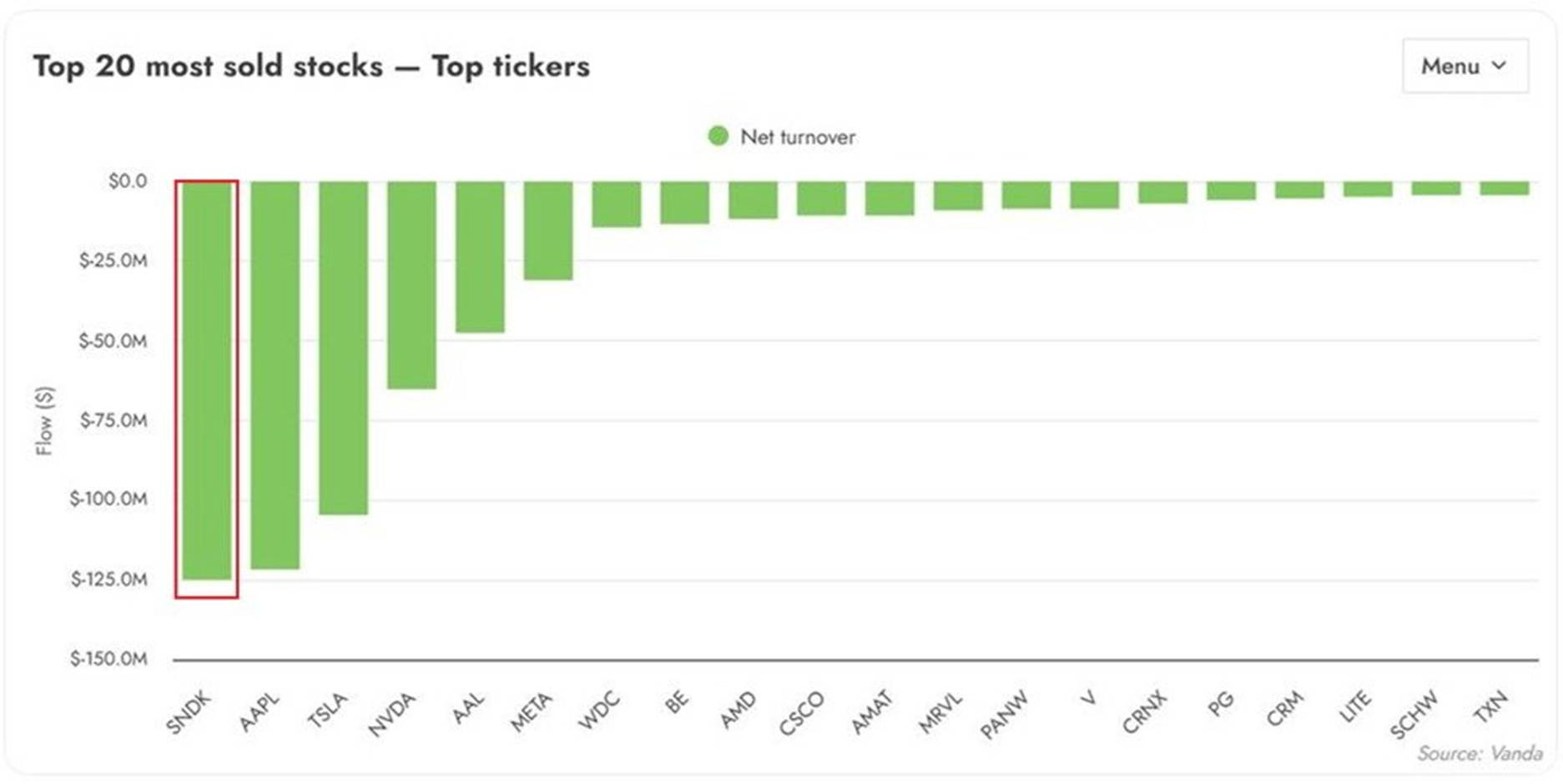
‘Retail is cashing-in tech profits: Retail investors sold -$125 million in SanDisk, $SNDK, stock last week, the largest sale among any stock. This was followed by Apple, $AAPL, at -$120 million, and Tesla, $TSLA, at -$105 million. Furthermore, retail investors sold -$65 million in Nvidia, $NVDA, -$40 million in American Airlines, $AAL, and -$22 million in Meta, $META. This brings 2-week retail sales volume in $TSLA and $AAPL up to -$200 million. Meanwhile, the total retail turnover in single stocks rose to a record $370 billion, up from $220 billion at the start of 2026. Retail investors are locking in gains following a historic tech rally.’
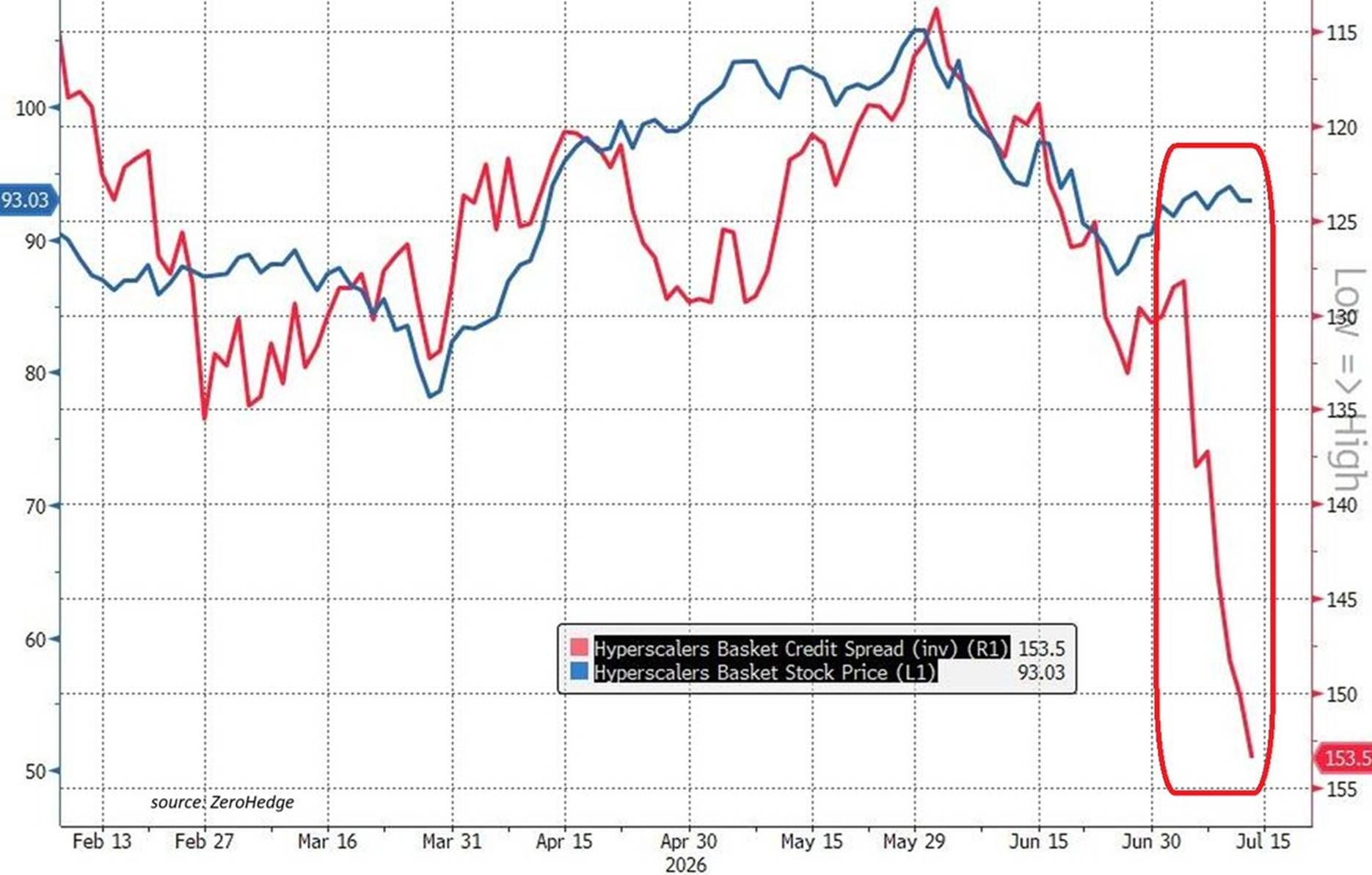
AI Credit Starting to Show Signs of Stress
Wider spreads and lower cover ratios suggest that the hyperscaler credit market isn’t a borrower’s market as much as it was just a few months ago. Stocks haven’t noticed. Yet.
‘AI CREDIT STRESS IS DIVERGING SHARPLY FROM STOCK PRICES: Hyperscaler credit spreads have widened to 153.5 bps over Treasuries, up from ~118 bps in February, the widest since Goldman Sachs launched this basket. Meanwhile, the hyperscaler equity basket has gained just ~3% over the same period, highlighting a growing divergence between equity and credit market sentiment. A credit spread measures the extra yield investors demand to hold a company’s bonds over Treasuries. A wider spread means investors require more compensation for risk and to absorb the new bond supply. At the same time, the cover ratio for hyperscaler bond deals, which measures investor demand relative to the amount of bonds issued, has fallen from ~5x in February to below 2x in July. This comes as hyperscalers are expected to spend a combined ~$5.5 trillion on AI capex through FY2030, with roughly half likely financed through investment-grade bond markets. This would require the IG bond market to absorb ~3.5% of additional net issuance every year, close to the ~3.1% average inflow cushion the USD market has had over the past 3 years, leaving little room for error if Fed rates rise or credit demand weakens. Credit markets have historically been the first to sniff out trouble well before stocks catch on, and if this stress keeps building, equity investors betting on the AI trade may eventually feel the fallout too.’
South Korea Regulator Unveils Curbs on High-Risk ETFs
Why now? Do they know something?
‘South Korea’s top financial regulator unveiled measures to curb risks from single-stock leveraged exchange-traded funds, seeking to stabilize a local stock market that has seen wild swings, as individual investors use debt to chase profits amid artificial-intelligence-related jitters.
‘The Financial Services Commission said Thursday that it would suspend new listings of single-stock leveraged ETFs, ban securities firms and asset managers from advertising or marketing such products, and triple the minimum cash deposit for new investments to 30 million won, equivalent to around $20,000.’
South Korea Retail Getting Margin Calls
Maybe that’s why now.
‘Goldman - “As of July 13, a total of over 1.2 million leveraged retail accounts across the Korean market triggered margin calls. Approximately 320,000–360,000 accounts were fully liquidated by brokers. South Korea has an adult population (aged 15–64) of 35.7 million people… i.e. 1 in 30 (3.4%) adults got margin called.”’
Here’s What Is Happening Behind the Market’s Swings, in Charts
There was too much P/L in the tech names. With the transition into H2, it’s a natural time to rebalance.
‘Many analysts expect the stock rally to keep broadening beyond just big tech during the second half of the year. Just a few weeks in, it is becoming clear investors are looking beyond hyperscalers and chip makers.’
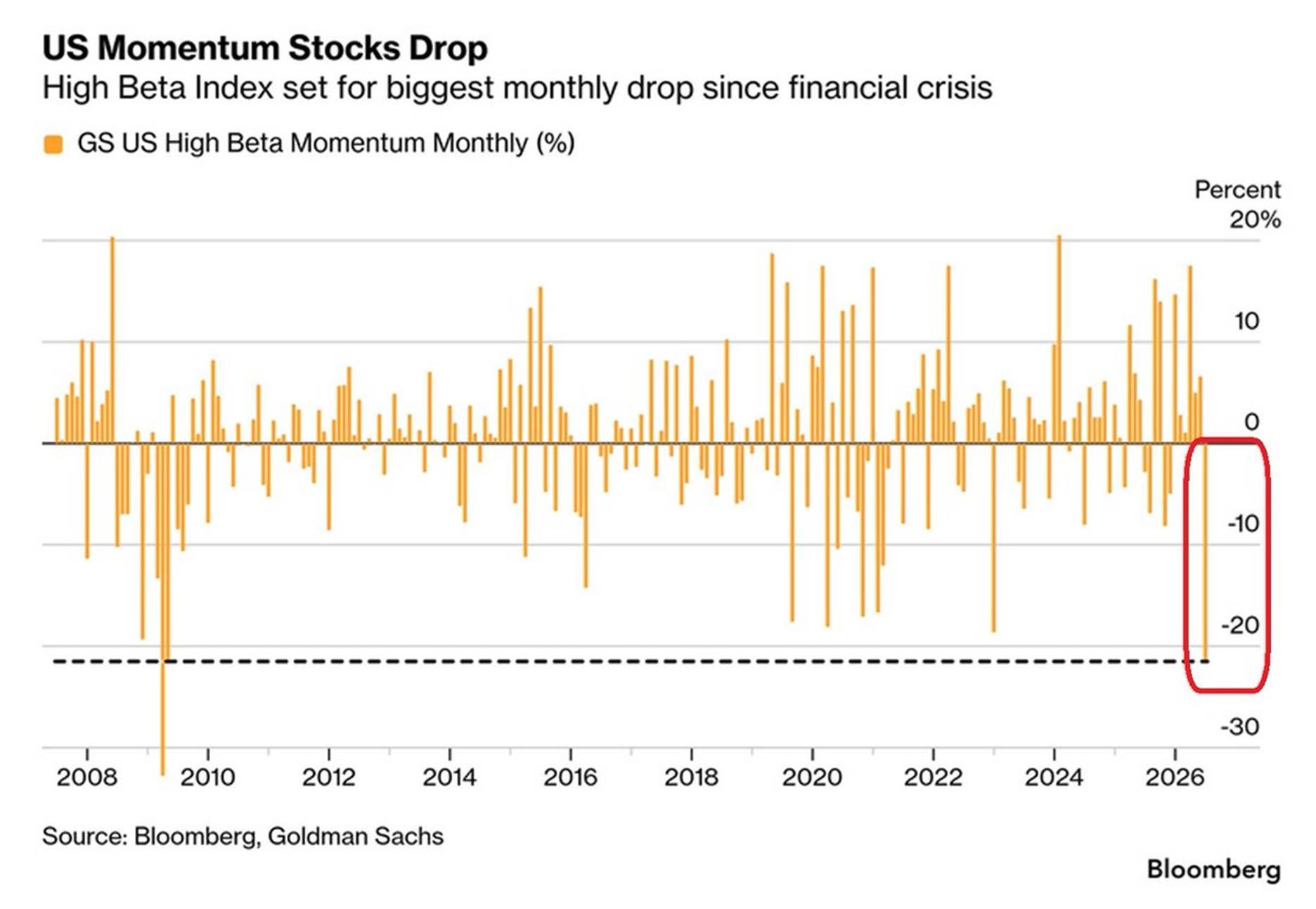
The big H2 rotation is moving apace.
‘MOMENTUM STOCKS ARE UNRAVELING AT THEIR FASTEST PACE SINCE THE GREAT FINANCIAL CRISIS: Goldman’s US High Beta Momentum basket is on track to fall -23% this month, its worst monthly decline in 17 years, when it fell as much as -34% in its steepest month. This basket tracks volatile, high-beta momentum names, with stocks like Nvidia, $NVDA, Super Micro Computer, $SMCI, Palantir, $PLTR, D-Wave Quantum, $QBTS, and Navitas Semiconductor, $NVTS, among the names contributing most to its moves. These stocks are also among the most favorite of retail investors. This comes as investors increasingly question whether AI hyperscalers are overbuilding their capacity. The most speculative corner of the AI trade is unwinding at a furious pace.’
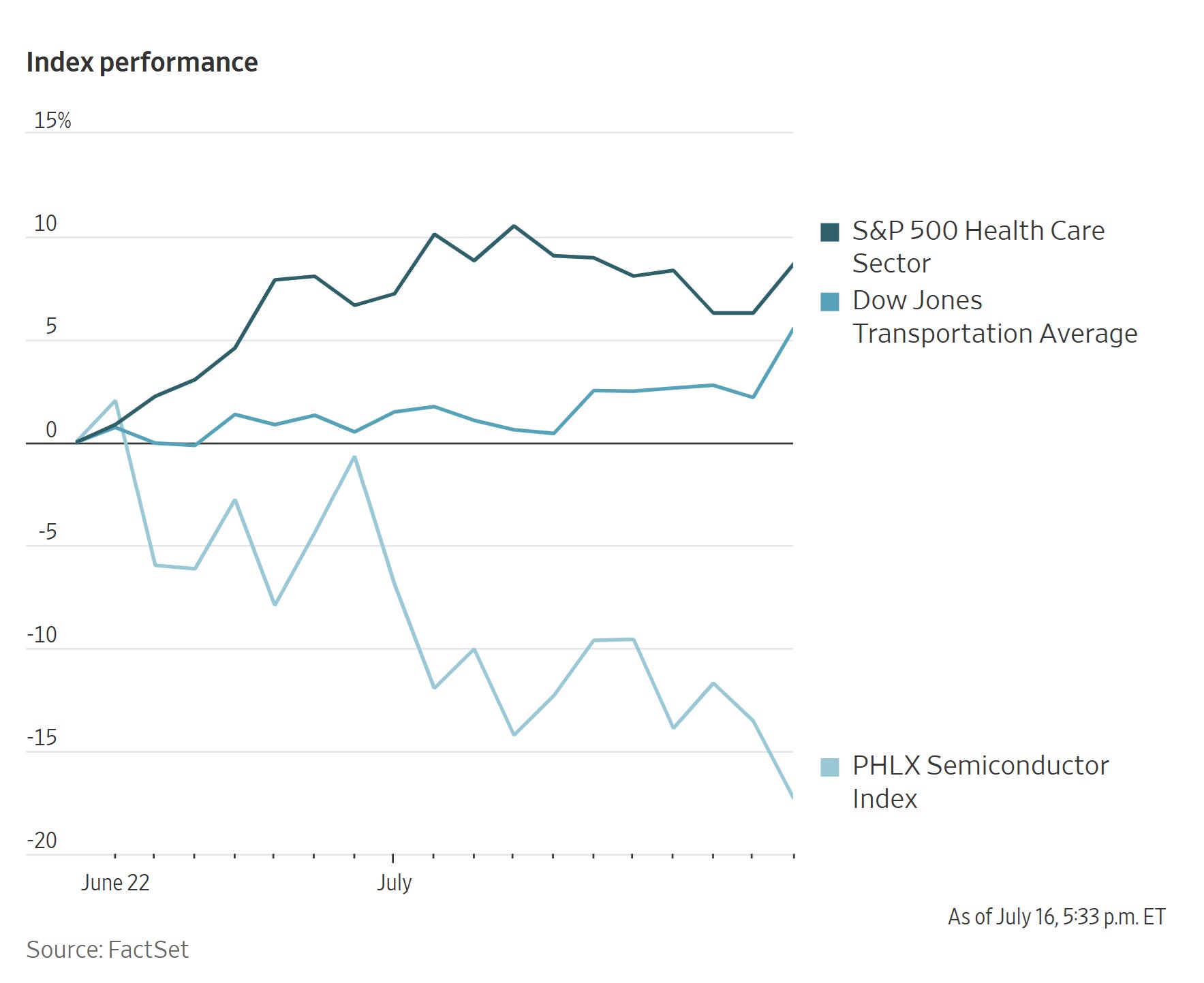
If you think rates are going to move lower while economic growth holds up, these are the kinds of companies you’d find interesting. It’s been amazing to see the reversal over the past few years of the traditional Famaesque anomaly that would suggest small caps outperform large caps for reasons such as under-coverage, etc. It’s been all large cap all the time. No mas.
This is good for breadth.
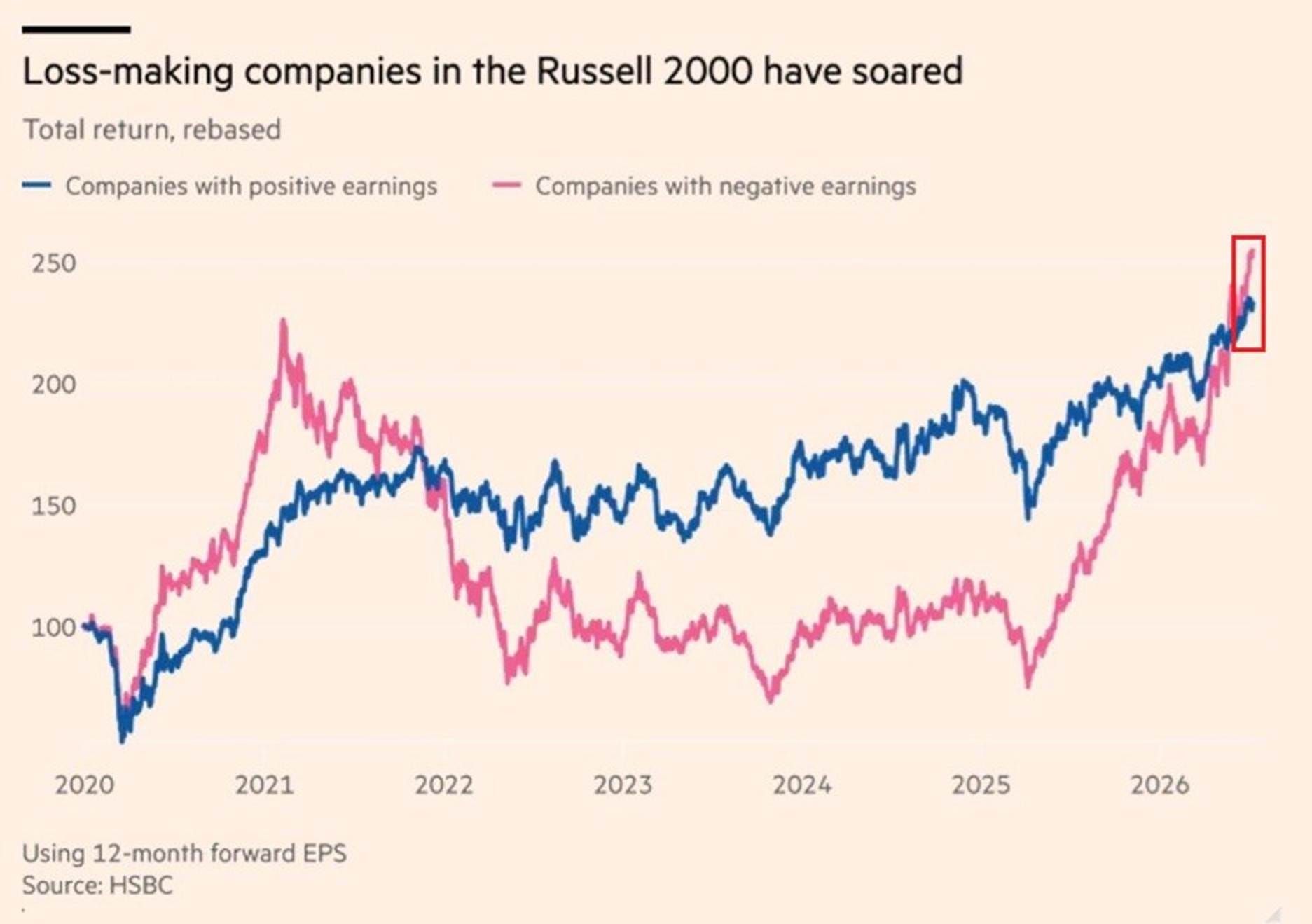
‘Unprofitable small-cap stocks are skyrocketing: Russell 2000 companies with negative earnings per share (EPS) have returned +154% since mid-2025. Over the same timeperiod, firms with positive EPS have gained just +34%. Year-to-date, unprofitable companies in the index have surged +45%, beating the +18% gain of profitable firms. As a result, the Russell 2000 has rallied +20% so far in 2026, on track for its best year since 2003. By comparison, the S&P 500 has risen +11% while the Magnificent 7 has gained just +4%. This comes as the best-performing small-cap stocks have been technology and infrastructure companies positioned to benefit from AI spending. The market is rewarding AI exposure, regardless of profitability.’
This is encouraging for the market overall. The turbulence then, per this theory, is due to the rotation.
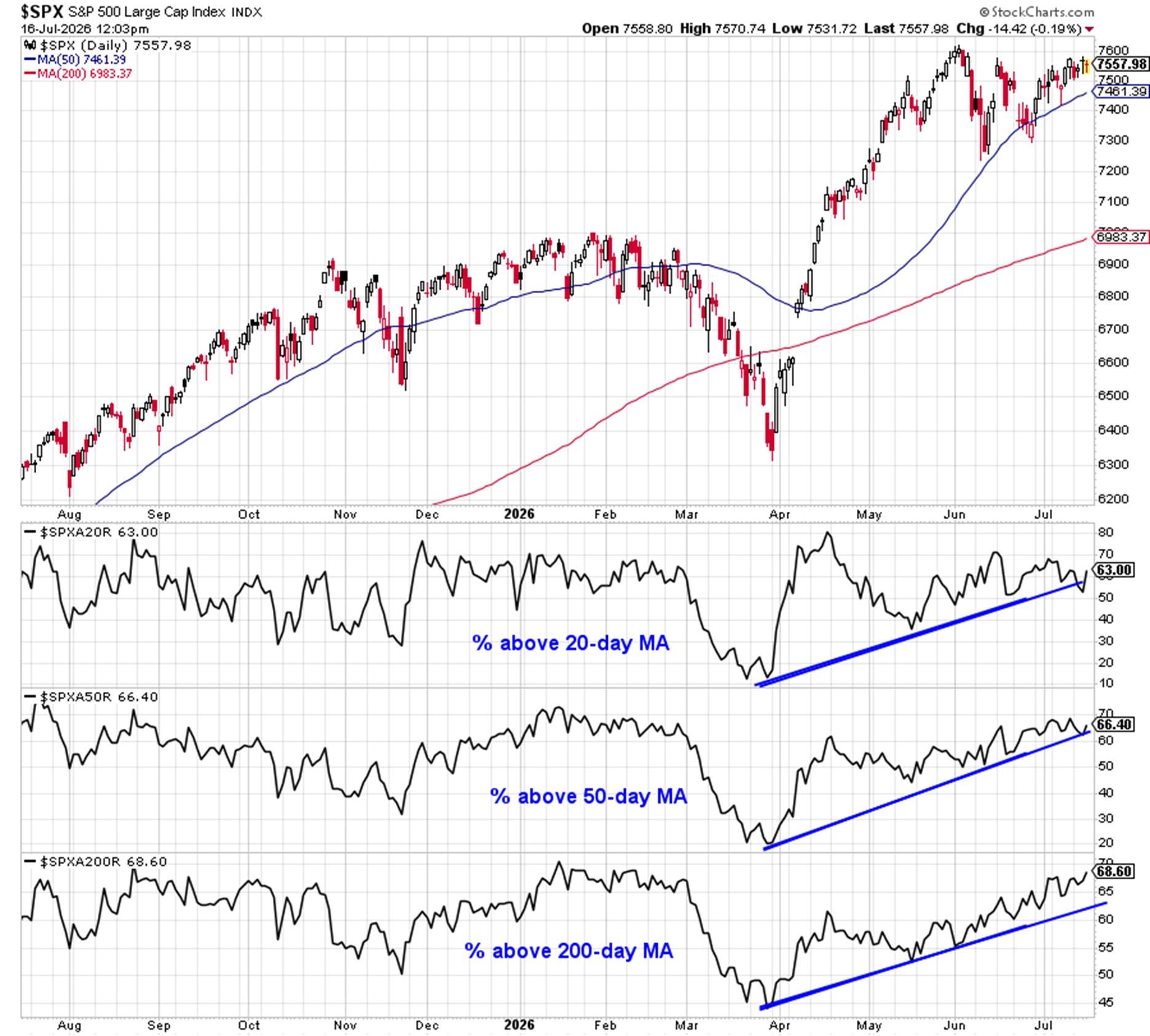
‘The number of stocks in the S&P 500 above their 200-day MA continues to trend higher and is close to 70%, the highest level since February. This is not bearish action and suggests the surprise summer rally has legs.’
Market Is So Risk-On That Path Higher Looks Tough
If the market can’t go higher on good news, maybe we’ve run out of marginal buyers, at least for the time being.
‘Bullish equity investors have embraced a Goldilocks scenario, driving risk-on sentiment to the point where it’s harder to identify what will trigger the next leg higher.
‘Cooler-than-expected US inflation provided a boost, but it was temporary and stocks are having trouble making fresh highs. Yields on 10-year Treasuries remain near 4.6%, and the dollar index is hovering around levels not far off its May 2025 highs. Those conditions are keeping equities in check for now, even with a largely positive start to the earnings season.’
Disclaimer: The content in this publication reflects my personal trading activities, market observations, and investment thought process. Nothing here constitutes investment advice, financial advice, trading advice, or any other sort of advice, and you should not treat any of this content as such. I am not a registered investment advisor or financial professional. All trading and investment decisions carry risk, including the potential loss of principal. You should conduct your own research, perform your own analysis, and consult with qualified financial professionals before making any investment decisions. Past performance does not guarantee future results. I may hold positions in securities discussed.